I just discovered UPL videos and I think that these kind of videos are focused on non-auditors people but they are amazing sources for making students enjoying to learn vocabulary in English.

English In Bloom
Monday, November 11, 2019

Monday, March 11, 2019
Teaching English Online
STEPS FOR AN ONLINE LESSON CLASS:
1. Setting clear learning goals
2. Planning
3. Good management skills
4. Using gestures
5. Establishing and building rapport
6. Bringing energy to an online lesson
HOW TO START A FIRST SESSION ON AN ONLINE LESSON CLASS?
1.- Check connections
2.- greeting
3.- Meet each other
4.- Smile
5.- Introduce the items, sources and steps
7.- show a little bit of your personality
8.- And the most important step is PLANNING and back- up plan. This is what teachers do, in other way, we're are not teaching, we're chatting. And if planning didn't work the back- up plan is the support for reaching the learning goal.
Outline of listening lesson
Jigsaw listening – for homework, half the class watch one talk and the other half watch a different talk but on the same topic. In the next lesson, learners work in pairs in breakout rooms and compare the speakers’ views and justifications.
A song – a young learner watches a video of people performing a song. The teacher helps the learner to learn the words using pictures and mime, and they sing along.
A dictogloss – in class, the teacher reads out a short text giving factual information. The learner listens and then takes notes about what they heard. These two steps are repeated. The learner then uses their notes to reconstruct the text, typing it onto the whiteboard. The teacher offers feedback and support to help the learner be more accurate. Finally, the learner compares their text to the original.
A film clip – in class, learners watch a short clip from a film with no sound. They predict what they think the people were saying and type their ideas into the chat box. They then watch with the sound on to check.
Questions – in class, the teacher reads out a set of questions. Each time, the learner has to count the number of words they hear. The teacher asks the questions again and the learner answers them.
Which photo? – in class, the teacher displays six photos using the share screen option. The teacher then reads out a sentence to describe one of the photos, saying where something is, e.g. The cat’s sitting on the table. The young learner says which photo the teacher is describing.
Learning objectives
A. To use body language and facial expressions to understand meaning.
B. To listen for the key points and key words/phrases.
C. To implicitly learn new vocabulary and language in an engaging way.
D. To understand prepositions of place.
E. To understand the speaker’s opinion and his/her justification for that opinion.
F. To recognise weak forms and connected speech.
1. Kahoot
Kahoot is an online tool designed to check learners’ understanding or knowledge.
2. Quizlet
Quizlet is an online tool designed to help learners memorise information, e.g. vocabulary items.
3. Quiz your English
The Quiz your English app is a language game which learners play with other users from around the world and compete for points.
SETTING CONTEXT:
• Using pictures • Creating a cartoon • Using a film clip • Telling an anecdote or story • Using an avatar • Using drawings • Using a short text • Creating a video presentation • Using realia (props)
Kahoot is an online tool designed to check learners’ understanding or knowledge.
2. Quizlet
Quizlet is an online tool designed to help learners memorise information, e.g. vocabulary items.
3. Quiz your English
The Quiz your English app is a language game which learners play with other users from around the world and compete for points.
SETTING CONTEXT:
• Using pictures • Creating a cartoon • Using a film clip • Telling an anecdote or story • Using an avatar • Using drawings • Using a short text • Creating a video presentation • Using realia (props)
TEST YOUR ENGLISH: https://www.cambridgeenglish.org/test-your-english/
In what ways do you develop your teaching skills at the moment?
Sunday, July 8, 2018
Grammar and Vocabulary
Is there a place for grammar and vocabulary in the communicative approach?
Some teachers might have heard that grammar is not really taught in communicative approaches to language teaching. Early on, some practitioners did indeed move away from directly dealing with grammar. But if we see grammar and vocabulary as the building blocks of the language, both are needed to create meaning as effectively as possible. So, grammar definitely has its place in the modern communicative classroom, as well as vocabulary. Assessing them is appropriate, both separately and through the four skills, as long as we do it in an effective way.
Source: British Council
Saturday, June 30, 2018
Assessment Language
Formats, tasks and settings
In an assessment, there are lots of ways in which we can try to reproduce the conditions of real life speaking. This video introduces some possibilities. Which formats, tasks and settings do you have experience of?
Formats
Common formats for speaking tests include:
- Interview: This has the advantage of being interactive, but is not like a real conversation because one person usually asks all the questions and the other answers them.
- Oral presentation: Presentations can be useful in business or academic situations, but they are not very interactive.
- Interactive task: When two or more students work together, it encourages natural student interaction and genuine communication. However, one student’s performance might affect the other’s.
- Group discussion: This can work well with large classes because it saves time by assessing students together. However, teachers need to be careful not to allow any students to dominate while others say very little.
Tasks
Speaking tasks commonly used in assessment include:
- Describing something: For example, describing a picture. This gives students something to talk about, and it doesn’t require students to read anything.
- Comparing things: This is similar to describing something, but can be more demanding. It encourages students to compare and contrast two different things.
- Telling a story: This is a very natural speaking activity. Stories can be based on pictures. Alternatively, students can tell their own stories, but some students might find it difficult to think of a story to tell.
- Giving some personal information: This is also a natural speaking activity, and focuses on personal topics that students are familiar with. As well as basic information, it can include talking about personal experiences and opinions.
Settings
Technology has made a variety of different settings possible for speaking tests:
- Live: This doesn’t require any technology, but it means that the assessment has to be completed in real-time.
- Recorded: This allows lots of students’ speaking performances to be recorded at the same time, and it also means that markers can listen more than once. However, it means that markers need time to listen to the recordings after the test.
- Face-to-face: This might be considered more realistic, but it means that the marker and the students need to be in the same place for the test.
- Remote (via phone or internet): This may feel different from face-to-face communication, but it can make tests easier to access, especially for students in remote locations.
Different types of rating scale, holistic and analytic.
Holistic (sometimes called global) rating scales give one overall score for a piece of writing or speaking. Holistic scales are often easier for teachers to use, and can produce more consistent marking.Analytic rating scales give separate scores for different aspects of writing or speaking, such as task achievement, vocabulary, and grammar, for example. Analytic rating scales can be useful for formative assessment, because they give learners more detailed information about the strengths and weaknesses of their writing.
In short:
To make sure your students ‘know a word’ you might want to check some or all of the following:
- meaning and use: this can depend on context (the same word can be used and have different meanings in different contexts) and on level (our students will learn additional meanings and uses as they progress)
- word families: suffixes and prefixes that can be used to change meaning (e.g. use - misuse) or word class (e.g. use - usual)
- spelling: how to spell (allowing for differences between British and North American English) and how to write the word (e.g. are capitals necessary?)
- pronunciation: receptive and productive, including word stress (again allowing for differences between British and North American English)
- collocations and grammar patterns: which words can come before and after it and how fixed they are.
Knowing is more than simply recognising. Students have to put their grammar into practice when speaking or writing.
Thursday, July 6, 2017
The use of sound- THE PSYCHOLOGY OF LEARNING
The use of sound
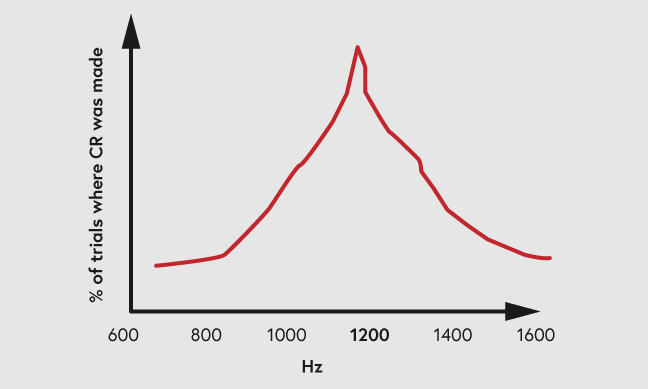
Using sound as the conditioned stimulus is a good way to illustrate stimulus generalisation. As the chart below illustrates, if your conditioned response sound was set at the frequency of 1200Hz, the probability of response would be greatest at that frequency, but that there was a level of generalisation either side of 1200Hz.
Source: Monash University
Using sound as the conditioned stimulus is a good way to illustrate stimulus generalisation. As the chart below illustrates, if your conditioned response sound was set at the frequency of 1200Hz, the probability of response would be greatest at that frequency, but that there was a level of generalisation either side of 1200Hz.
Wednesday, July 5, 2017
Computer Programming
The processor (the ‘brain’ of a device)
Computers are everywhere, and so is computation. If you know where to look, the effects of computerisation can be seen in non-digital objects.
A
Agile
An approach to software development, originally defined in the Agile Manifesto. It focuses on iteration, steady growth and responding to change, rather than trying to plan everything up front.
Algorithm
A repeatable, unambiguous set of instructions to perform a task or computation.
B
BASIC
Beginners’ All-purpose Symbolic Instruction Code. A coding language designed at Dartmouth College, USA in the 1960s. For many decades it was an introduction to programming for beginners.
Blockly
A visual programming system made by Google that runs inside your web browser.
Blockly Maze
One of the games available on Blockly where users steer a character around a maze.
Blockly Turtle
One of the games available on Blockly where users make line drawings.
Bug
A mistake in a program. Minor bugs may cause it to behave incorrectly; major bugs may stop it working entirely.
C
Checksum
A number that can be calculated using arithmetic to confirm the validity of some data.
Compiler
A program that converts source code into executable code.
CPU
Central Processing Unit which is the main computational processor of a computer.
E
ENIAC
ENIAC (Electronic Numerical Integrator and Computer) was the world’s first general purpose electronic computer. That means it was not fixed doing one task, but could be ‘reprogrammed’ in order to change what it did. Reprogramming it involved rewiring and connecting its electronic parts. It was mainly used to generate tables of numbers used by the US Army for firing artillery guns.
End-user
The person who will use the end-product or need the answer to the problem.
F
Function
An instruction or command in a programming language
I
Interpreter
A program that transforms source code to executable code a line at a time, running it as it goes.
L
Logic
A formal set of rules that can be followed to make a clear decision. Algorithms at the heart of a computer program are usually built around logical rules.
M
Machine Code
Code that the processor of a computer can run directly; not usually written by hand these days.
Microcontroller
A tiny computer on a single chip, often found in computer electronics.
O
Operating System
The ‘base layer’ of a computer or smartphone. The operating system provides access to core hardware and software features (such as disk storage or networking). Computer programs run on the top of the operating system, and talk to it to integrate with those features, rather than having to talk to them all directly.
P
Pair programming
Two programmers working together at one computer to write code.
Processor
The circuitry in a computer that performs the instructions from a computer program; these days, a small chip.
Program
A set of instructions that can be given to a computer for it to perform a task.
Programming Language
What computer programs are written in. They must be interpreted or compiled in order to run.
S
Scrum master
A member of an agile team responsible for managing the team’s process.
Source Code
The code of a program, written in a programming language.
Sprint
Repeating period of time spent working.
U
UNIX
Uniplexed Information and Computer Systems. An operating system for computers. Originally developed in the 1970s, forms of Unix are still used on computers today. The two most notable Unix-based operating systems today are MacOS, used by every Apple computer, and Linux, most commonly found on servers across the internet.
LISTENING ASSESSMENT
Listening vs hearing
Remember when we talked about testing reading? We said that the brain works very hard, so although reading is receptive, it is definitely not passive. As we have just heard, listening is the same; the brain does so many things when it listens. Lots of different processes work together, and usually in a few seconds.
For many teachers, listening is the hardest thing to test. You can’t see it, you can’t measure it, but you do need to test whether someone is a good listener or not.
Listening is clearly a very important part of communication; we listen, then we respond, but how do we know when to respond?
This is what your brain does when it listens.
First we hear the sound and decide what kind of a sound it is (music, someone speaking, traffic, etc.).
When we realise it is someone speaking, the brain compares it with words that it already knows. This helps you to understand what you hear. If your brain doesn’t understand, it tells you to check. If it does understand, it helps you to respond.
Your brain does all these things in just a few seconds, often before the person speaking has finished.
Think about this for a minute; your brain must be really active to listen so quickly!
So, listening is clearly a highly complex process. It involves both sound recognition and an ability to make sense of these sounds to understand a message.
We have already seen that listening is a very active process and an important aspect of communication. In fact, on average, listening accounts for around 45% of the time adults spend in communication, in comparison to speaking at 30%.
Communication needs both a sender and a receiver of a message. The receiver has the responsibility to process information in order to respond to it or use it appropriately. In terms of listening, it is sometimes difficult to know just how much of a message has been understood accurately. Listening tests aim to provide a measure of this.
Why do people listen? We need to ask this question in order to identify ‘real-life’ listening scenarios and decide which of these are most relevant to our learners’ needs, and the requirements of the syllabus they are working from.
Listening tests can be based on a wide range of material, such as interviews, advertisements, announcements and talks. However, these should always be chosen with the test takers in mind. For this, we need to consider the language of the recordings in relation to the CEFR, the actual skills we want to test and the kinds of questions or tasks which would be most useful and motivating.
In the reading section, we talked about different types of reading. Similarly, we also talk about different types of listening, or listening behaviours. These correspond to different purposes for listening and normally relate to different text types.
Each of these different listening behaviours is generally called a listening sub-skill, and we commonly distinguish five of them.
- Listening for gist - Gist is a general understanding. Students do not have to understand every word because the idea is clear enough.
- Listening for specific information - Listening for keywords and important ideas. Students focus more on the main points and should be ready to note down answers.
- Listening for detail - Listening to someone speaking and trying to get as much information as you can.
- Listening for inferred meaning - Students guess the real meaning from what someone has said. The answer may not be clear, so they are paying attention to cues.
- Listening for attitude - Focusing on the tone and on some keywords, listeners try to work out the behaviours and feelings of the speakers (e.g. whether they are enthusiastic or annoyed, bored or interested, kind or aggressive, etc.).
As you may have noticed, we already know many of these terms; the listening sub-skills we have listed above follow closely the reading sub-skills we mentioned at the beginning of the previous unit.
In real-life, a language learner will use any one of the five sub-skills with any type of listening. The skill they use depends on why they are listening, so the tasks you design need to test the right sub-skill.
For example, you would typically listen to a film review for gist because all you are really interested in is whether the film is good or not. You might also listen to a sport commentary for gist, purely to decide when to cheer for your team.
You listen for specific information when you listen to announcements at a train station. You are only interested in knowing which platform your train will depart from and whether it will be on time. In fact often you ‘tune in’ when you hear certain specific words, like your destination or the name of the railway company you are travelling with. If the information in the announcement is relevant to you, you will listen to it very carefully, otherwise, you will ignore it.
You listen to a lecture in detail because you need to take notes.
You infer meaning from a conversation or from a speech, deciding whether the message is bad or good. However, with inferred meaning, culture plays a big role, and different listeners could infer different meaning. For example, if a train company said: ‘There are leaves on the line’ in the UK, a Japanese student would infer that the train will be a little late. A British student, on the other hand, would probably expect the train to be at least an hour late.
Again, we see how crucial world knowledge is in determining our understanding of what we hear. If we look at the listening process more closely, again we find that both top-down and bottom-up processing are involved. And of course, you will need to test both.
To summarise, the progression of listening skills can be observed as learners move up through the levels:
- from the individual word level (Pre A1) to extended speech (C1 - C2)
- from very short questions (Pre A1) to short narratives (B1) to any kind of spoken language (C2)
- from needing visual aids or gestures to support understanding (Pre A1) to understanding with ease any kind of language live or broadcast (C2)
- from very slow delivery and careful articulation (Pre A1 - A1) to clear standard speech (B1 - B2) and dealing with unfamiliar accents (C1) and fast natural speed (C2)
- from understanding concrete information on everyday topics (A2) to the main points of complex lines of argument on familiar (B2) and unfamiliar subjects (C1)
- from standard high-frequency language (A2) to a wide range of idioms and colloquialisms (C2).
Look at the scale in more detail. At which level are your students? We often find that our students are between two levels or may have one level for a specific scale and a different level on another scale! Don’t worry, that’s perfectly normal!
Task types for assessing listening
Many of the tasks used for assessing reading are also suitable for testing listening skills.
Let’s have a look at some of the most common task types:
- Multiple choice questions and True/False questions normally consist of a ‘stem’, and a list of options, which includes the correct answer(s) (the ‘key’) together with a few ‘distractors’. Two common variations of this type of task are matching tasks (e.g. tasks that require candidates to identify who says what) and ordering tasks (e.g. tasks where candidates need to order information or parts of a dialogue).
- Gap fill and cloze are texts where a few words have been taken out and substituted with blanks. Test takers are expected to listen to a text and fill in the blanks with the missing word(s). In this case, textual and language skills might compensate for a lack of listening skills (e.g. even if a student hasn’t listened properly, he might still be able to fill in the blank with an appropriate word).
- Short answer questions can be considered a type of open question where test takers are required to use a specific number of words. This type of task can be difficult to score because we’ll need to decide in advance how to deal with grammatical and spelling mistakes.
- Information transfer are tasks where candidates are expected to listen to a text and fill in a table, or label charts and diagrams based on the information they receive.
- Integrated tasks require the use of a different skill (usually a productive one, like speaking and/or writing). Examples can be summary and note-taking tasks, etc. When scoring this kind of task, we’ll need to take into account to what extent productive skills are required and how they can impact the students’ performances.
- Dictation is a task that nowadays is often frowned upon, although, as we’ve heard in the video, it can have its merits, especially if used in combination with other tasks.
The choice of tasks we put in our tests will depend on lots of things. Why do the students need English? What kind of listening will they be doing? How do you use that information to produce a task that they can do?
It is very important to try and mimic a real-life activity and to include a variety of task types and of listening sub-skills (listening for specific information, listening for detail, etc.), targeting both higher and lower level processing so that we can really get a picture of what students can do with their language skills.
Something that was touched upon in the video is how tasks for listening also involve other skills. Professor Luke Harding mentions this in relation to dictation, explaining that dictation can be a useful assessment tool, but we should be careful and acknowledge that, to some extent, we are also testing writing skills.
We could argue that any of the tasks we mentioned above requires the use of another skill; listening in itself is impossible to measure, so we need some kind of proof of that understanding, for example, a tick on a multiple choice task or an answer in writing that we can read (and mark). Therefore, it is important that we are careful about grading the language in the questions and keep it especially simple to avoid shifting from testing listening to testing reading (e.g. if the task is too difficult to understand).
Finally, it’s worth mentioning that, when designing a test, we should always consider going from easier to more difficult (and finishing off with something slightly easier). Students often need some time to start listening properly and concentrate, so having a difficult item at the beginning might be problematic. As the test progresses, the students concentrate more and will begin to listen better. Towards the end, again, they might be a bit tired, or they might not have enough time to listen properly, so it’s better to have something slightly easier again.
My favorite type of task for assessing listening skill is: DICTATION but it's important that it should not be the only kind of task I should use.
When thinking about listening assessment, first we need to consider the purpose of our test. This is also important when finding listening materials to develop a test.
We should think of a relevant listening situation and we should know which listening skills we want to test. Then we can select the listening and develop the tasks. If the perfect resource is available online (e.g. from a podcast) or from a published collection, this is great, but if not, we may need to consider creating our own materials.
As we’ve heard from Professor Luke Harding, with modern technology, it has become much easier to create our own listening materials. If your school has good recording equipment, you could produce your own materials. However, you do need to be careful about the quality of the materials. Recordings on a laptop computer or a mobile phone can have echoes or can have poor quality in general. Poor quality recordings would not be suitable for an assessment. So, if you can’t make good recordings, it is better to use ready-made audio, perhaps from a course book.
Then there is the question of audio or video. Certainly, video provides richer input by providing contextual clues. Seeing the expressions and body language of the speakers can also help. This can be more authentic because real-life listening often happens in a situational context in which we can see the speakers (apart from phone calls, radio etc.).
But using videos can be challenging. For example, not all institutions will have access to the necessary facilities, or maybe they don’t have them in every classroom.
Also, they can distract our learners from the task they have to complete, which might lead to a poor performance. Students might find it hard to watch the video and do the task at the same time.
So, unless we want to test something that specifically needs video support, for example, note-taking in a lecture, we might choose not to use videos in tests, but they are still very useful for our teaching practice.
If you want to know more about the advantages and disadvantages of creating your own materials read the advice below.
Creating our own materials for listening assessment
Recording your own listening material for tests is a good way of building a bank of materials suitable for particular students and contexts. By doing this, teachers can choose the topics, script the language and make sure the material fits the type of test required. However, there are both advantages and disadvantages with doing this.
Advantages
- We can adapt our materials to the needs and level of our students, and choose the most appropriate topics, discourse and pace.
- We can tailor ‘in-house’ test material exactly to meet the needs of the course and institution.
Disadvantages
- It can be time-consuming to record, edit and then develop the tasks so we need to plan well in advance.
- Authentic speech can be very difficult, so it may not be suitable for lower levels. On the other hand, if we decide to write a script, we would need to include intonation, emphasis, repetitions, false starts, signposts etc. to make it feel authentic. It is difficult to follow a spoken text unless these are in place.
- The quality of home-made recordings can be poor if the equipment is not excellent. Background noise can make the listening very hard for the test takers but, on the other hand, it can lend authenticity to a situation.
And what about using materials available on the internet?
As teachers, we all know the power of the internet, and how it has changed our daily practice. Certainly, lots of materials are out there, but what are the advantages and disadvantages?
Advantages
- The internet offers huge amounts of freely accessible listening resources, including some graded materials. Sometimes they also include ready-made tasks.
- We can find listening material with a range of accents.
Disadvantages
- Sometimes resources can be taken down or suddenly become unavailable. Also, if the internet connection is slow or not stable, it can be risky to listen directly from the Internet during a test.
- Not everything that is online is of good quality or suitable for our needs. We should always look at things critically and ask ourselves if they are fit for our purpose.
- There might be copyright issues with some of the materials that are online. This means that we should carefully check our sources, as well as the rules and regulations in our own teaching situation (as these vary from country to country and from school to school).
- Sometimes online material requires cutting and editing, which can be time-consuming and can compromise the quality.
Top tips for developing listening tests
Before we move on to think about how to score listening and reading tests, let’s listen to a few words of advice from Professor Barry O’Sullivan OBE about assessing listening and developing listening tests.
Here are some other important points to keep in mind.
When preparing a listening test:
- Make sure that the questions used test listening skills and cannot be answered from general knowledge.
- If you are using a video, make sure that the answer to a question is not displayed on the screen. For example, a PowerPoint slide in a lecture may contain the answer you are testing!
On the day:
- The room should be chosen with care. Make sure it is quiet and that there will be no sudden noise outside, for instance, during break times. This may affect the clarity of an audio or video.
- Many listening exams require short answers or multiple choice answers. These are easy to copy so make sure test takers are well-spaced and cannot see each others’ papers.
- It is best not to allow latecomers into listening exams. This will disrupt the audio for other test takers. If the audio or video is played twice, latecomers could be allowed to come in for the second playing.
- It is a good idea to allow test takers to have paper to take notes. However, make sure these are collected along with the answers.
- Always do a sound test to make sure everyone can hear clearly - the sound should be equally distributed so that no one is at an advantage or disadvantage. For this reason, it may be wise not to have rooms which are very large but to divide students into smaller groups and rooms if possible.
- Test takers should not leave the room - except in an emergency, of course - while an audio or video is playing as this will create noise and disturb the others.
Developing a reading test does not stop when we have selected our text, and developed our tasks. Here are a few important points to remember.
- As with all tests, we start by deciding what exactly we want to test; based on this, we choose the best task type and, thus, the best scoring method.
- Make sure the instructions are clear, so that our students will know exactly what to do. It’s generally a good idea to include an example to avoid any possible misunderstanding.
- If possible, it’s also a good idea to get the test checked by another teacher.
- We need to decide how we are going to score the test, and make sure that our students understand what the criteria are. For example, we want to determine the weighting of the different tasks and questions. Are we going to give each correct answer 1 point regardless of the difficulty of the question or task? Or are we going to assign more points for a more difficult task?
- If students have to write something, we need to decide how we are going to mark their answers if there is a mistake in their spelling, or grammar, or vocabulary. When deciding whether to deduct points for grammatical or spelling mistakes, we should always consider first the purpose of our test. If we only want to test reading, then the quality of the writing is only important if it stops us understanding the answer. If, on the other hand, we are going to assess both the reading and the writing together, then we need to think about how each skill is going to influence the other (i.e. how poor reading skills might result in a badly written text and how a lack of writing skills might prevent us from recognising the extent to which the reading text has been understood).
- Scoring in a listening or reading assessment needs to target the information that the assessor thinks is reasonable to assess for the age, level and context of the learners.
- Scoring should allow for useful feedback to be provided to learners – they need to know where they made errors.
- Generally, punctuation should not be considered a feature of a test of listening.
In the next steps, we’ll look at a few concrete examples of listening tasks and discuss how they can be scored so the points above will become clearer.
How would you score this task?
Here is a first example. Look at the task below and listen to the audio. The test is aimed at an A2 level learner.
Task 1: Listen to the phone call and write the missing information.
| Greystones Coaches | Booking form |
| Organisation: | ___ ____ ___ ____ (1 mark) |
| Address: | _ ____ ___ (1 mark) |
What do you think about this task? Are there any issues with it? Do you think it is suitable for an A2 learner?
For example, looking at the task, you may ask yourself the following questions.
- The student is writing four words for one mark and then three words for another one mark. Is this balanced? Is one harder than the other?
- What happens if the learner gets part of an answer correct (e.g. they answer Park School) for Question 1? Do they get 1 mark, half a mark or no marks?
- Do the words have to be spelt correctly?
- What do the students know about how the teacher is going to mark this task?
Here’s another example. It is a slightly changed version of the phone call you listened to in the previous step. While you listen, think about the differences. Then read the text below.
In this listening, for example, we have more repetition: the employee at Greystone Coaches asks the caller to repeat both the name of the organisation and the address. So students will actually hear twice all the details they have to write down. Consider how this version is different from the previous one.
The listening is not the only thing that has changed since the previous step. The task has changed as well.
Task 1 - V.2: Listen to the phone call and write the missing information.
| Greystones Coaches | Booking form |
| Name of organisation: | ___ ____ ___ ____ (4 marks) |
| Address: | __ _____ ___ (3 marks) |
In this version of the test, the learner gains a mark for each word they write.
This will help to simplify the scoring because it means that each word can be marked on its own and the learner’s attention can be drawn to the errors. It also means that there will possibly be a wider range of marks (in the first version, learners either scored 2, 1 or 0 from the two items; in this version, learners will have a score from 0 to 7).
The question over spelling remains, however. Decide whether the learners have to spell the word correctly.
Let’s think about the weighting. In Question 2, a student will get a mark for hearing and writing the number 4, but they also get only one mark for hearing and writing the word ‘castle’. Is this a problem? Consider whether these are equally difficult, keeping in mind that the student hears each word twice in the recording.
If we changed the task again, would it have an effect on the scoring? Look at Version 3 of the same task (the audio is the same if you want to listen to it again).
Task 1 - V.3: Listen to the phone call and write the missing information.
| Greystones Coaches | Booking form |
| Name of organisation: | ___ ____ ___ School (3 marks) |
| Address: | Four ____ ___ (2 marks) |
So in this version, the learners have been given the words ‘School’ and ‘Four’. This reduces how much the learners have to write while listening but it also removes two ‘easier’ items. This may have the effect of making the task slightly harder, but if the missing words in the gaps are the target words the teacher actually wishes to test, then this may be better. Equally, a task could be made easier by changing the missing words:
| Address: | __ Castle Road (1 mark) |
It is important to note from these examples that the test writer has had to take a number of decisions which will change the level of difficulty of the task, the way it is marked, and what is being assessed. These are decisions which have to be made when the test is designed and the items are written.
source: British Council
Subscribe to:
Posts (Atom)